Most AI creator content fails not because the images are bad, but because the content type is wrong. Creators optimize for engagement — likes, follows, comments — and then wonder why no one is buying. Engagement and purchase intent are not the same signal. A fan who likes every post and never unlocks a single PPV is not your customer. A fan who barely reacts but asks "do you have anything more intense?" in a DM is.
This guide breaks down the 7 content types that actually convert in 2026 — with real unlock rates, pricing benchmarks, and the specific mistakes that kill sales. The data comes from Fanvue and Fansly creator forums, platform analytics shared by creators, and the patterns behind the DM strategy numbers we've covered elsewhere on this blog.
The 30-second answer
The highest-converting content in 2026 is not the most explicit — it's the most strategic. Censored full-body teasers unlock at 15-25%. Outfit reveal sequences (3-5 photos sold as a bundle) unlock at 20-35%. Custom requests convert at 95%+. Voice note PPVs are an emerging category with low competition. What kills sales: fully blurred previews (no context), full nudity previews (no reason to unlock), and flat pricing across all fan segments.
Engagement content vs purchase content: not the same thing
The most-liked content on a Fanvue profile is rarely the most-purchased. There's a structural reason: free content on the feed is optimized to attract and retain subs. PPV content is optimized to convert those subs into buyers. Mixing the two — putting your best content free, or making every PPV feel like a sales pitch — collapses both functions.
The pattern that works: free content establishes the persona (the look, the aesthetic, the character). PPV content delivers the payoff that the free content implies but never shows. If your free content is lifestyle shots and your PPV is more of the same, there's no reason to unlock. If your free content is a censored teaser of something specific, the PPV that delivers that thing converts.
Three data points that illustrate the gap: a face-only lifestyle photo gets high likes and near-0% PPV unlock rate. A lifestyle suggestive photo gets average likes and 8-12% unlock. A censored full-body teaser gets low likes and 15-25% unlock. Counterintuitive but consistent: what drives purchase is not what drives engagement.
The 7 content types that actually sell
Each type below includes the unlock rate range, the right price range relative to your subscription, and what makes it convert — or not.
Type 1 — Censored full-body teaser
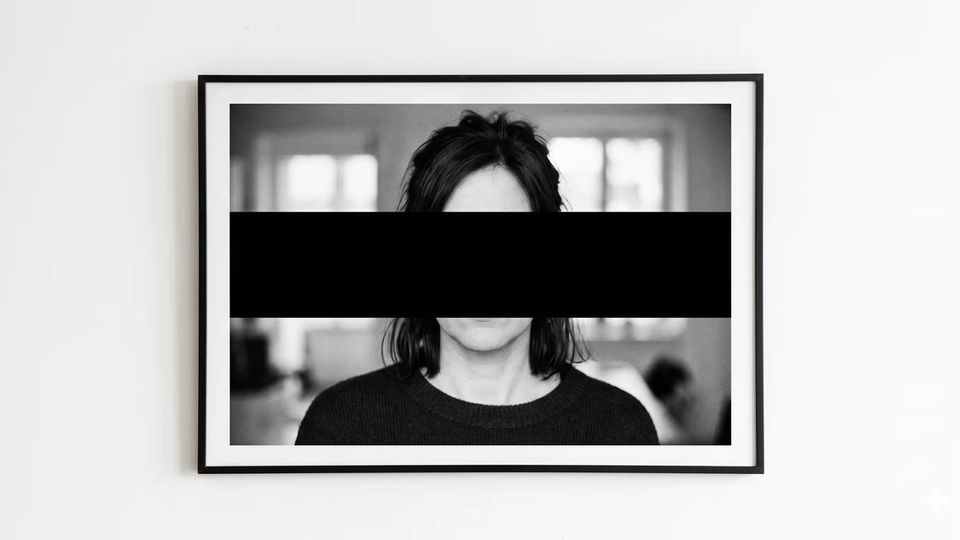
A single image showing enough context to understand what's happening, but with a strategic black bar or crop hiding the reveal. Not blurred — blurring removes context. The censorship bar signals that there's something specific to unlock, which the blur doesn't.
- Unlock rate: 15-25%
- Pricing: sub × 2-3 ($15-25 for a $9.99 sub)
- What makes it work: specificity. The fan can see exactly what kind of content this is and what they're unlocking. Vagueness kills the offer.
- What kills it: using a full-blur instead of a censor bar. Also: offering the same type of censored teaser every time without varying scenarios — fan fatigue drops unlock rates by 30-40% after 3-4 identical formats.
Type 2 — POV-angle photo
First-person perspective: the camera is positioned as if the fan is the subject looking at the persona, not as a third-party observer. POV creates a sense of directness and intimacy that standard photography angles don't. For AI creators, this is a prompt-level choice — "looking directly at viewer" or "from the viewer's perspective" in the image generation prompt.
- Unlock rate: 12-20%
- Pricing: sub × 1.5-2 ($12-20 for a $9.99 sub)
- What makes it work: the sense of being addressed directly. Pair it with a personalized DM message that references the fan's name — the combination of POV image and personalized text converts significantly better than either alone.
- What kills it: delivering the POV as a mass broadcast. The format only works when it feels personal — mass-sending a POV image breaks the illusion instantly.
Type 3 — Outfit reveal sequence (bundle)
A set of 3-5 images sold together at a bundle price, structured as a narrative: first image shows the outfit, middle images show progressive reveal, final image delivers the payoff. The sequence format works because it justifies a higher bundle price, creates narrative momentum, and gives the buyer more perceived value than a single image at the same price.
- Unlock rate: 20-35% (highest unlock rate of all static image formats)
- Pricing: sub × 2.5-4 ($25-40 bundle for a $9.99 sub)
- What makes it work: the preview image must show the first image of the sequence (the outfit, the setup) so the fan understands the narrative they're buying into. A random censored thumbnail from the middle of the sequence loses the narrative.
- What kills it: 3 images that don't tell a story. A bundle of 3 random images at a higher price fails. The narrative structure is what justifies the bundle price.
Type 4 — Custom request content
Content generated specifically for one fan based on their stated preferences or scenario requests. This is not mass-producible by definition — it is always a manual session in OFGenerator with a custom prompt tailored to the fan's request. For AI creators, customs are uniquely powerful because the generation cost is the same whether you're fulfilling a mass-catalog image or a bespoke scenario.
- Conversion rate: 95%+ (among fans who are VIP potential or ready buyer and asked properly)
- Pricing: $50-200+ depending on complexity and fan tier
- What makes it work: the fan initiated. Customs are most effective when offered to fans who have already signaled interest in specific scenarios in DMs. Don't advertise customs publicly — offer them privately to the right segment.
- What kills it: offering customs to cold browsers (they won't buy), or pricing too low (signals low value and attracts difficult requests at unsustainable margins).
Type 5 — Voice note PPV
A short audio message (30-90 seconds) sent as a paid unlock in DMs. The persona speaks directly to the fan — a greeting, a scenario narration, a response to something they said. This is the least-saturated high-converting format in 2026: most AI creators don't use voice at all, which makes those who do immediately distinctive. OFGenerator's voice generation module lets you create on-persona voice notes without recording anything yourself.
- Unlock rate: 10-18% (lower than image, but low competition = less price resistance)
- Pricing: $5-15 for short notes, $20-40 for longer personalized voice scenarios
- What makes it work: voice creates a dimension of intimacy that images can't. Fans who buy voice notes renew at higher rates and tip more frequently. Use it strategically with VIP and VIP-potential fans rather than as a mass-broadcast format.
- What kills it: generic voice notes ("hi, thanks for subscribing") — the format only converts when it feels specific and direct. Personalize by fan name and reference something they said.
Type 6 — Short video clip (5-15 seconds)
An animated clip generated with Image-to-Video — subtle motion (breathing, hair movement, slow camera pan) applied to a strong image. Short clips work as teasers on the free feed (to drive PPV) and as standalone PPV unlocks. The motion adds premium feel without requiring complex generation. 5-15 seconds is the ideal range: long enough to feel like video, short enough to avoid the quality issues that longer AI generations produce.
- Unlock rate: 18-28%
- Pricing: sub × 2-4 ($20-40 for a $9.99 sub)
- What makes it work: video is perceived as more premium than images even at similar explicit levels. A censored short clip in DMs converts better than the equivalent still image at the same price.
- What kills it: posting short clips freely on the feed without gating. If fans can see your video content for free, the PPV version has no value. Keep video gated or use heavily cropped/censored versions as free previews only.
Type 7 — Roleplay scenario series
A multi-part content series built around a specific scenario — sold as individual unlocks in sequence or as a bundle. The scenario gives the fan a reason to come back ("part 2 coming Thursday") and creates anticipation that drives both unlock rate and retention. Examples: "beach day trip" (3 parts), "late night hotel" (4 parts), "back home after work" (2 parts). Each scenario is a small narrative arc in images or images + video.
- Unlock rate: 25-40% on parts 2+ for fans who unlocked part 1
- Pricing: sub × 3-6 per part, or sub × 6-10 for a full bundle ($30-60 for a $9.99 sub bundle)
- What makes it work: series create commitment loops. A fan who bought part 1 is psychologically invested in the story and converts on subsequent parts at much higher rates than a cold offer.
- What kills it: inconsistent release cadence. If part 1 ships Monday and part 2 takes 3 weeks, the fan loses the thread. Plan the full series before releasing part 1.
5 mistakes that kill your sales
- 1. Full-blur previews with no context. A fully blurred image tells the fan nothing about what they're buying. A censor bar over a specific detail tells them exactly what they're unlocking. The difference in unlock rate is 40-60%. Never send a fully blurred PPV without any visible context.
- 2. Full nudity in the preview. The opposite mistake: showing too much in the preview removes the reason to unlock. If the fan can see the full reveal in the thumbnail, the PPV has no value proposition. Strategic incompleteness is the conversion mechanism.
- 3. Same content type every time. Unlock rates on repeated formats drop 30-40% after 3-4 identical offers. Rotate between the 7 types. A fan who has unlocked 3 censored teasers is primed for a video clip or a bundle next — not a 4th censored teaser.
- 4. Flat pricing across all fans. Sending the same offer at the same price to your cold browsers and your VIP potentials is leaving money on both ends. Cold browsers don't convert at any reasonable price — don't try. VIP potentials will pay 5-10x your sub price on the right offer — don't undersell them.
- 5. No urgency, no scarcity. A PPV offer with no expiry and no limit converts 20-30% less than the same offer with real urgency ("available for 24h" or "first 10 unlocks only"). The urgency must be real — fans catch on quickly if you run "24h only" offers every week for months.
The content that sells needs to stay on-persona
Every content type on this list requires consistent. OFGenerator builds your model so you can generate the right format for the right fan, censored teasers, video clips. 10 free credits, no card
Start now — 10 free creditsPricing benchmarks by fan segment (real data)
Pricing is not about what you think the content is worth. It's about what each segment of your fan base will pay. Sending the same price to everyone is the fastest way to both under-earn on VIPs and waste offers on cold browsers.
Passive browsers: Don't send PPV offers. They don't convert at any price within a reasonable range. Move them to the automated mass-broadcast segment and save your manual effort for segments that buy.
Interested fans: sub × 2-5. For a $9.99 sub, that's $20-50 per PPV. Standard censored teaser or short clip at this range converts at 8-15%.
VIP potential fans: sub × 5-10. For a $9.99 sub, that's $50-100 on premium or custom-feeling offers. This segment is your 10% who generate 40-60% of your DM revenue.
Ready buyers: sub × 5+ on first offer, then escalate. They've signaled purchase intent immediately — start at the mid range and test upward. Ready buyers rarely push back on price; they push back on vague offers.
Customs: $50-200 base depending on complexity. For AI creators, the production cost is effectively the same as a regular image — the price premium is for exclusivity and personalization, not production effort. Don't price customs like regular PPV.
The myth: more explicit = more revenue
The most persistent misconception in AI creator monetization: that explicit content converts better than suggestive content. The data says the opposite. 80% of top earners on Fanvue and Fansly maintain a 70/30 or 80/20 ratio of suggestive to explicit content. The reason is structural, not moral: explicit content delivers the payoff and ends the transaction. Suggestive content maintains desire and extends the purchasing relationship.
A fan who unlocks explicit content three times in a row has been fully satisfied and has a lower incentive to keep spending. A fan who has unlocked 3 well-crafted suggestive sequences is in a sustained state of anticipation that keeps them purchasing. The explicit content still has its place — primarily in customs and as the occasional series finale — but it's a conversion endpoint, not a conversion driver.
Practical ratio for most accounts: 70% suggestive (teasers, POV, outfit reveals), 20% medium-explicit (implied scenarios), 10% fully explicit (reserved for customs and VIP series finales). This ratio maximizes both unlock rates on individual pieces and lifetime value per fan.
How to test what works for your specific persona
The unlock rates and price ranges above are baselines — your specific persona and niche will have its own performance curve. The only way to find your actual conversion data is to test systematically.
Test one variable at a time: same content, two different preview formats (censor bar vs strategic crop). Or same content, two different prices. Or two content types at the same price. Don't change two things at once — you won't know what moved the needle.
Track at minimum: content type, preview format, price, and unlock rate for every PPV sent. A simple spreadsheet with these four columns over 4 weeks gives you enough data to know which format works for your audience.
4-week minimum: Unlock rates vary week to week based on timing, fan mood, and external factors. One week of data is noise. Four weeks is signal.
Verdict: strategy, not explicitness, is the conversion driver
The creators who generate the most PPV revenue in 2026 are not the ones with the most explicit content — they're the ones who understand how each content type functions at each stage of the fan relationship. Censored teasers to open the transaction. Bundles to justify higher prices. Voice notes to deepen the relationship. Customs to extract maximum value from the 10% who will pay for anything personalized. Series to create retention loops.
For AI creators specifically, the production cost difference between these types is marginal — a censored teaser and a bundle both come from the same generation session. The strategic work is in how you frame, price, and sequence the content. That's where the revenue gap between a $300/month account and a $3,000/month account actually lives.
Further reading
The DM mechanics for delivering these content types are covered in the DM strategy playbook. The fan segmentation that determines which content type to send to which fan is detailed in the AI creator pricing strategy guide. For voice note generation to add Type 5 to your stack, see the AI voice generation guide for OFGenerator.
Sources
- Creator revenue and unlock rate data: Fanvue and Fansly forum discussions 2025-2026, r/FanslySupport, r/onlyfansadvice
- Fanvue platform guidelines and creator tools: legal.fanvue.com
One persona model, 7 content types
Rotating across 7 content types requires a model that stays consistent. OFGenerator keeps your persona for censored teasers, bundles, video clips, and custom requests. 10 free credits, no card
Start now — 10 free credits